图像参数:

  • 分辨率: 2048×1536 @ 300×300 DPI 17.34×13.00cm
  • 文件大小: 658.74 KB
  • 贡献者: 用户已注销 , 16年前
  • 图片状态: 已通过

任何图片都有权益人。 如果您认为有用户存在不正确的上传行为,我们诚挚地请您撰写评论并指出错误。 前往论坛可以讨论任何车型的任何话题。

评论

9年前
Wheels&Tracks

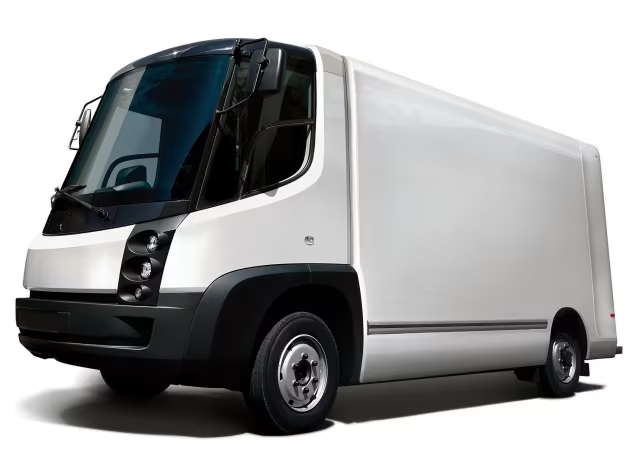
The eStar was an all-electric van. Production began in March 2010 and first deliveries began two months later. The technology used in eStar was licensed to Navistar in 2009 in a joint venture with Modec and Navistar bought the intellectual property rights from the Modec's bankruptcy administrators in 2011. The introduction of the eStar was supported by a US$39.2 million U.S. Department of Energy stimulus grant under the 2009 American Recovery and Reinvestment Act.

The eStar had a 5,100 lb (2,300 kg) payload capacity available with a 14- or 16-foot cargo box. The vehicle was powered by a 70 kW 102 hp electric motor powered by an 80kWhr lithium-ion battery pack supplied by A123 Systems, and also used regenerative braking. The electric van had a range of 100 mi (160 km), and a full charge took between 6 and 8 hours. By May 2010 the eStar had received U.S. Environmental Protection Agency (EPA) and CARB certifications. The eStar also met all Federal Motor Vehicle Safety Standards (FMVSS).

The first vans were delivered in May 2010 to FedEx Express for use in Los Angeles. Other customers included Pacific Gas and Electric Company (PG&E), The Coca-Cola Company, and Canada Post. The eStar had a price of US$150,000.

Navistar discontinued the eStar van in March 2013, as part of a corporate restructuring plan to focus on current profitability.

https://en.wikipedia.org/wiki/Navistar_International

为方便发表评论,您需要注册账号或用社交网站账号登陆

WheelsAge.org '2005–至今