JSPC '1983–92
The All Japan Sports Prototype Championship, abbreviated as JSPC, formed by the Japan Automobile Federation, was a domestic championship which took place in Japan for Group C and IMSA GTP prototype cars and also featured cars that were eligible for touring car racing in its earlier years. Class A and Class B for production cars which were defined by the FIA (Group A and Group B) and the lead category, Class C would be for cars that are similar to IMSA's Camel Lights and the WEC's C2, whereas Class D was for C1/GTP cars.
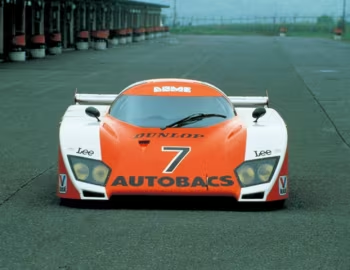
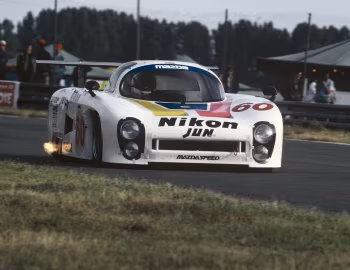
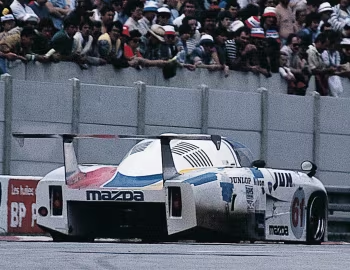
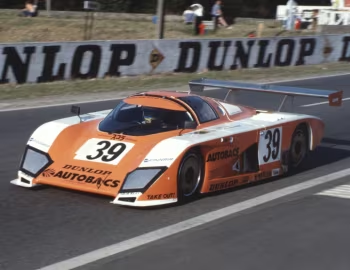
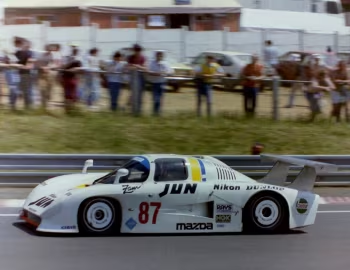
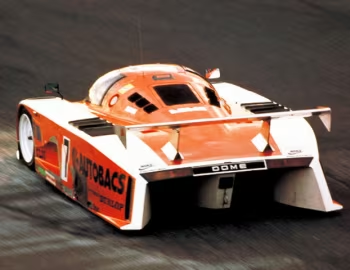
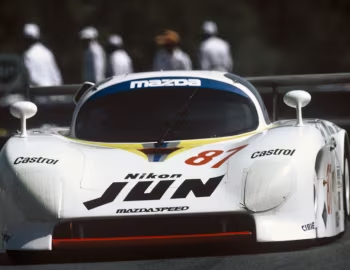
All Japan Endurance Championship '1985
Mazda 737C '1985
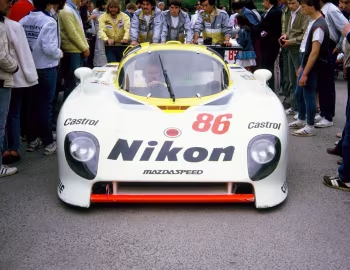
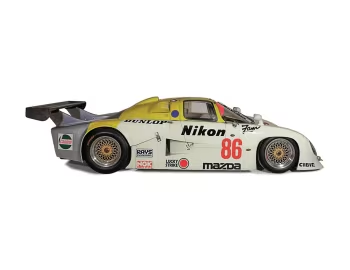
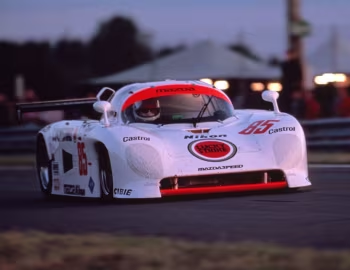
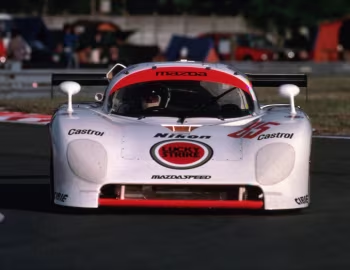
The Mazda 737C is a prototype racing car that was built for Mazdaspeed for the 24 Hours of Le Mans under the Group C2 formula. It was the final evolution of the initial Mooncraft built design dating back to the 717C. It again used a 2-rotor 13B Wankel engine. Two 737Cs were entered in the 1985 24 Hours of Le Mans, finishing 3rd and 6th in the C2 class. The 737Cs were also raced in part of the 1985 World Sportscar Championship season, managing 8th place for Mazdaspeed in the C2 teams championship. In the All Japan Sports Prototype Championship, Mazda was able to come home 5th in the constructor's championship. 737Cs later ended up in the hands of privateers for the JSPC after Mazda replaced it with the newer 757.
Mazda 757 '1986总产量2辆
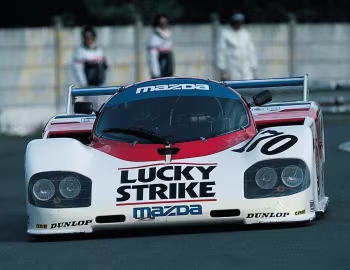
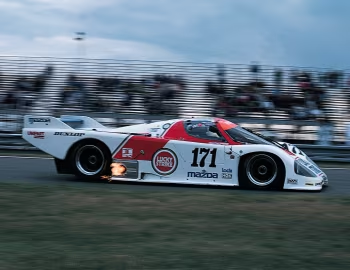
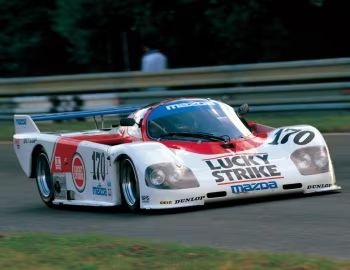
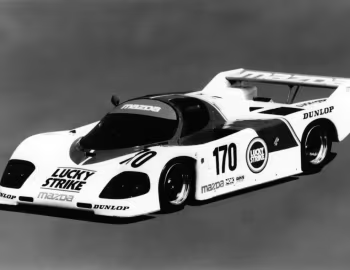
Two 757s entered the 1986 24 Hours of Le Mans, but both failed to finish the race due to gearbox problems, marking the first time Mazdaspeed had failed to finish at Le Mans. In the All Japan Sports Prototype Championship season, Mazda was able to come home 3rd in the manufacturer's championship.
Shizumatsu Racing Mazda 737C '1986
Mazda 757 '1987总产量2辆
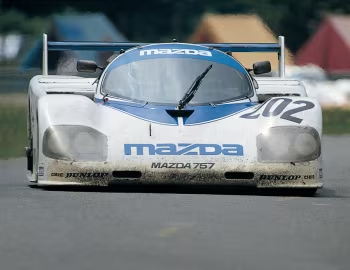
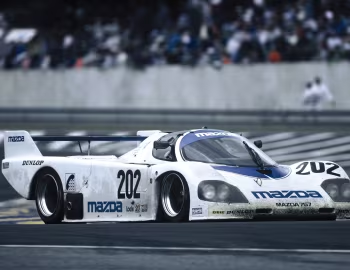
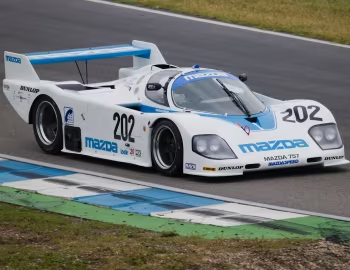
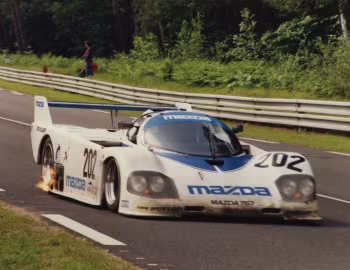
For 1987, two 757s were again entered, with one finishing 7th overall while the other suffered engine failure. Along with a good result at the joint World Sportscar Championship and All Japan Sports Prototype Championship event at Fuji, Mazdaspeed was able to achieve 10th in the teams championship for WSC and 3rd in the manufacturer's championship for JSPC.
URD Junior Team URD C81/2 '1987


Mazda 767 '1988总产量2辆
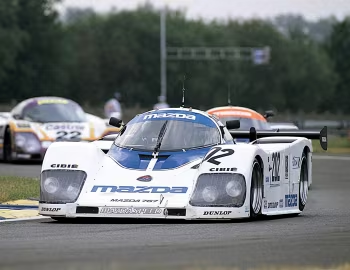
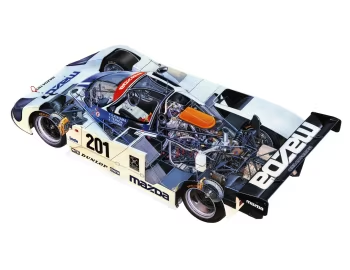
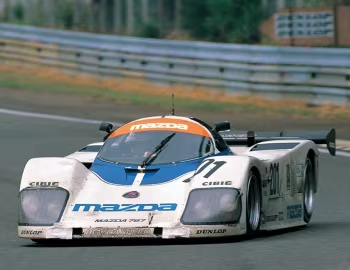
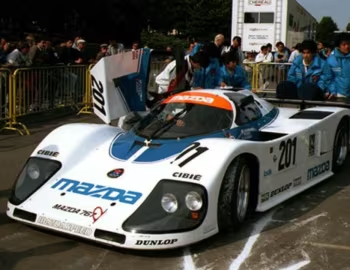
Two 767s were entered at 1988 24 Hours of Le Mans, finishing 17th and 19th overall, however they finished behind a sole 757 which was able to finish 15th. In the All Japan Sports Prototype Championship, Mazda managed 4th in the constructors' championship.
Shizumatsu Racing Mazda 757 '1988总产量1辆
WheelsAge.org '2005–至今